“What is it?”: Robert Wilson at Rice

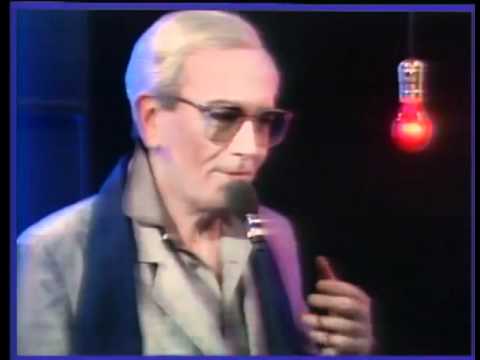
“What we see is what we see, and what we hear is what we hear,” Robert Wilson said on March 27, the second night of the three-night Campbell Lecture Series at Rice University. I know Wilson first as the director of the opera Einstein on the Beach. But his theatrical genius extends before and after 1976, when the opera first premiered. Describing his impressive body of work, Wilson focused on a tension between sight and sound winding eventually to a question of meaning. It is by chance that we find a relationship between what we hear and what we see, he explained.

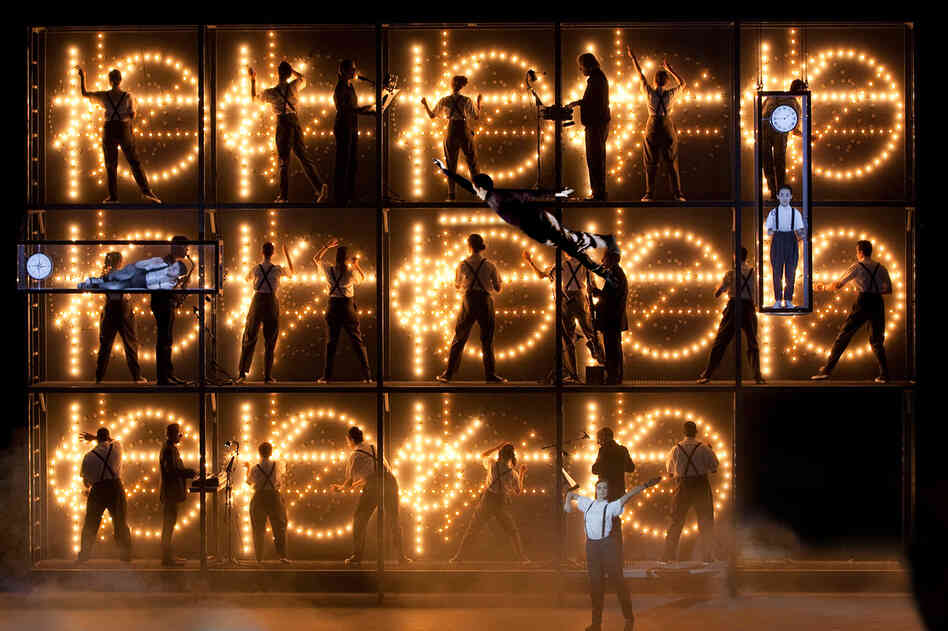
A few hours before this lecture, I had been editing a piece of writing about duration in Einstein’s musical score. While still relying on constraints of time in its compositional structure, the opening of this opera is not built around measures or time signatures. There is a durational relationship at work between three notes: the first A lasts forty seconds, followed by G for sixty seconds, and then a C for eighty seconds. I confess, although I’m embarrassed to admit it, that somehow I had missed the visual score entirely—Wilson’s grid map of time—which, among many things, swings a bar of light from horizontal to vertical in sixteen magical minutes. I’m left wondering now how we see and hear time. Can it be separated? How is the experience different?

To open his lecture, Wilson stood in silence for just over two minutes before telling a story about an architecture professor he had in college in the early 1960s. While she lectured, three screens flashed images behind her which had nothing to do with what she said. After seven or eight months in her class, Wilson remembers that he began to make associations between these unrelated things. One day, she walked to the podium with a black leather handbag, opened it, and took out a fish carefully wrapped in Saran plastic wrap and laid it on the podium. And then she began to talk about Bauhaus architecture without ever mentioning or explaining the fish. At the end of her lecture she wrapped up the fish, put it in her handbag, and left the room. The next day, she brought an orange and set it on her podium. “I’m still thinking about that orange” Wilson said.

Speaking about Einstein, Wilson insists there is no message to get, although this is not the same as saying it is meaningless. And here, again, the building tension between seeing and hearing returns. Wilson strives to create a visual on stage that will sound clearer than if one’s eyes were closed. As a striking example of his investment in a visual score, Wilson described how he staged Wagner’s entire sixteen-hour Ring cycle without the music. The final product was extraordinary.

It feels almost ironic to seek answers to the durational questions Einstein raises in both its aural and visual score. But it is also comforting to be so perplexed by a work. The reason to be an artist, Wilson said, is to ask questions—not say what something is, but to ask “what is it?” And if we know the answer already, it’s not worth doing.

The Campbell Lecture Series in Rice’s School of Humanities brings a distinguished humanities scholar each year to campus. Wilson’s last lecture in the series is tonight, March 28, at 6pm. He promises to speak about his recent work with Lady Gaga. For more info, visit campbell.rice.edu.
OH Preview: A New Executive Director and Lucia di Lammermoor


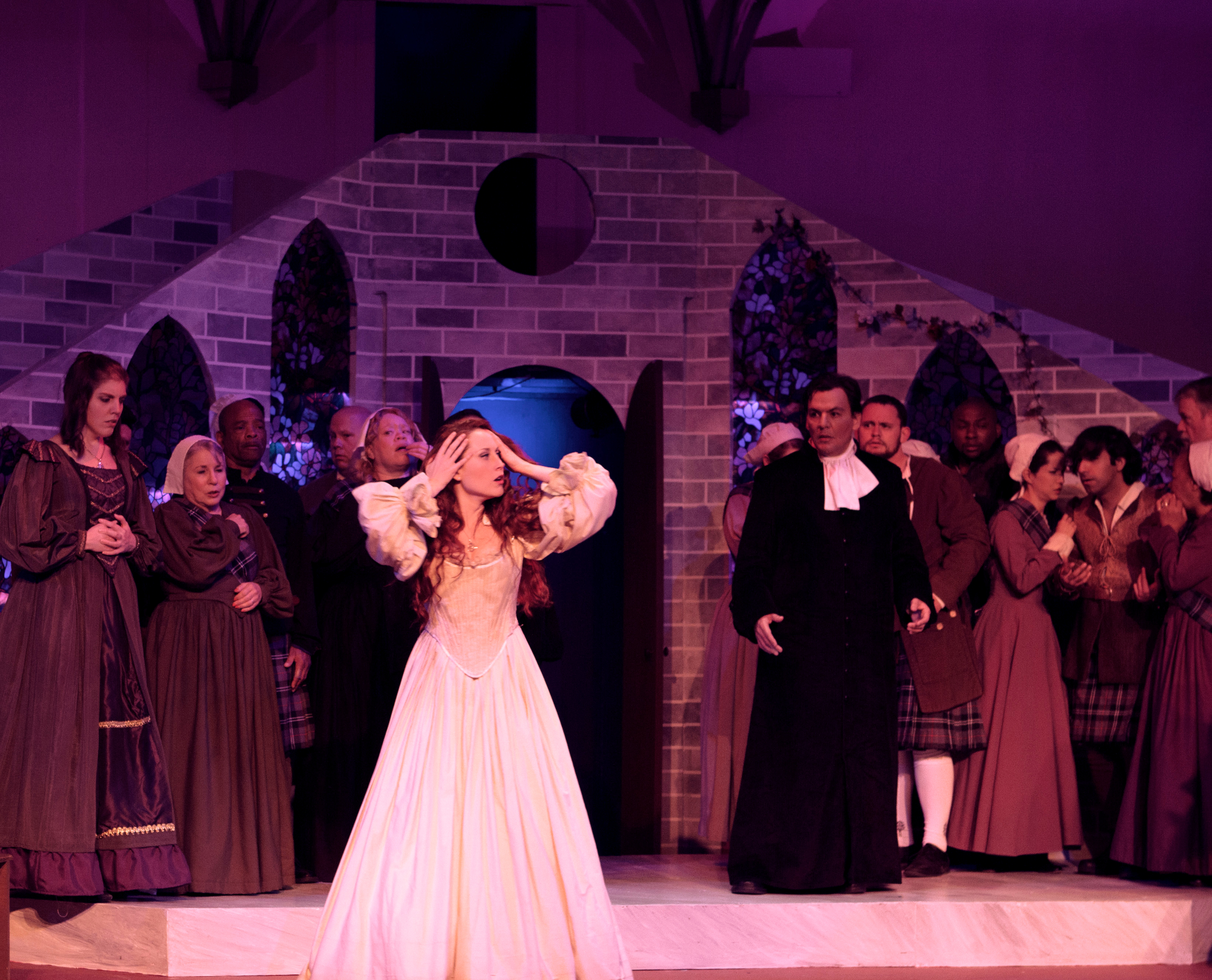
Jessica Jones as Lucia. Photo by Shannon Langman

Some might say that opera is a dying art, but when Stephanie Helms thinks of Opera in the Heights, she sees a young, uncommon life form. As OH’s new executive director, Helms intends to engage the community more than ever and build the company while maintaining its distinct identity: “We are not HGO. We are not the Met. We are Opera in the Heights,” Helms said this afternoon in her new office on Heights Boulevard.

Helms is in the unique position of fostering the small-town atmosphere that sets OH apart while also focusing on development. From 2006 to 2011, Helms worked for Houston Grand Opera. She returns to Houston from OPERA America in New York City where she oversaw the design and construction of the National Opera Center. “I loved my time at HGO, but I like being a part of this smaller organization,” Helms said. “Singers have this language when they’re on stage with each other…if you’re in a big house, in the audience, you don’t see that, but in a small house you get to see…that chemistry that happens between singers on stage then extends into the audience and everyone is having this experience together.” Although much of what she has planned will take time to implement—music classes and choirs for children and adults—Helms is enthusiastic:  “I get so excited about it I can hardly speak coherently about it.”

As Helms begins her tenure at OH, her cohort is preparing for the final show of the season: Gaetano Donizetti’s tragic Lucia di Lammermoor opens this Friday, March 28. You may know the murderous tale from Walter Scott’s 1819 novel The Bride of Lammermoor, from which it was originally adapted. But the opera’s literary influence has lingered—it is also the opera that overcomes Flaubert’s fated Emma Bovary and acts as a turning point in E.M. Forster’s Where Angels Fear to Tread when uptight Philip dives from his box seats in ecstasy while the biddy Harriet exclaims “Call this classical! It’s not even respectable!”

Although she describes herself as a theatre nerd with a soft spot for Puccini’s La Boheme, Helms uses what she called “normal people language” to discuss Lucia. Even though Lucia boasts perhaps the most famous mad scene in all of opera, Helms said she is enchanted by the music: “I think people will say, well, this is Lucia—isn’t that the one where she kills people or she’s bloody? And you think, oh, dark, depressing….Yes, she has a fantastic mad scene at the end. But it’s not terribly hard to digest. It’s nice, it’s light, it’s beautiful.”

Lucia also has a reputation for being a coloratura soprano’s dream: the score offers countless moments to show off. It is common for a singer to write in her own cadenzas or flourishes. The renowned mad scene can be astonishing when it’s done right. The Met’s stunning 2011 production with Natalie Dessay in the title role stands as remarkable proof that this long-awaited scene can make or break the whole opera.

And the intimate setting of Lambert Hall could make the mad scene positively scintillating.

 “The times I’ve been most moved by opera have been at HGO” Helms said. “I love that they’re able to bring a perspective to art on a national and international scene….There’s real huge value in that…but there is real huge value in packaging it in a way that is very accessible…to people who might not otherwise even think about attending the opera,” Helms said. “I don’t know if I could do this any other way.”

Lucia di Lammermoor runs March 28 – April 6. For tickets and more info, check out their website.

The Women Have It: HGO’s Glamorous A Little Night Music

Photo by Lynn Lane

Whose voice do you hear singing “Send in the Clowns?” It has to be Barbra Streisand, doesn’t it? Maybe it’s the more classic Judy Collins or Frank Sinatra. Perhaps the original takes the cake, Glynis Johns? The flashier Judi Dench or Cher? Maybe even The Simpson’s season four rendition by Krusty the Clown? Arguably the best known ballad from Stephen Sondheim’s A Little Night Music, this crowd-pleaser is bound to pick up any show if it has fallen flat. But Houston Grand Opera’s production, created by Opera Theatre of Saint Louis, is superb from the start.

A Little Night Music toys with a rotating trio of mismatched couples. Fredrik, married for the second time to the innocent and much younger Anne, loves the glamorous actress Desiree. But Desiree is having an affair with the high-strung Count Carl-Magnus Malcolm, who is married to the depressed but devoted Countess Charlotte. And Fredrik’s strapping son Henrik, a seminary student no less, is in love with his step-mother Anne—a twisted situation he has no problem gasping about in guilt.

Above all the coy and jealous games, though, A Little Night Music is about women: wives, mothers, step-mothers, daughters, and grandmothers drive this musical. Familiar tropes of working mothers appear early with “The Glamorous Life,” in which Desiree’s young daughter Fredrika sings “Ordinary mothers lead ordinary lives / Keep the house and sweep the parlour / cook the meals and look exhausted” before revealing her mother is anything but the norm, packing and unpacking constantly to keep up her theatre career on the road.

There was no end to the impressive female cast: Soprano Elizabeth Futral, singing the role of Desiree Armfeldt has a deep, smoky tone that won’t let you down—her “Send in the Clowns” held its own against the sea of other renditions. As the virginal Anne, Andrea Carroll wasted no time in showing off her soprano chops—bell-like and unwavering, Carroll’s voice carried across the theatre with charming grace. Mezzo-sopranos Joyce Castle and Carolyn Sproule as Madame Armfeldt and Countess Charlotte Malcolm respectively, each stole a part of the show—especially Sproule’s “A Little Death” that coursed with expression. And as little Fredrika, Grace Muir will be a singer to watch—she was pitch perfect and consistently delightful.

But the men still managed to make an impression. While baritone Mark Diamond played the stuffy part of Count Carl-Magnus Malcolm flawlessly, his voice—a dreamy combination of strength and divine vibrato control—brought unexpected sexiness to his uptight character. Chad Shelton, in the tenor role of Fredrik Egerman, matched Elizabeth Futral’s in charisma. Making his HGO debut as Henrik, Brenton Ryan proved as endearing in character as his voice has talent—he is a tenor I hope to hear again soon.

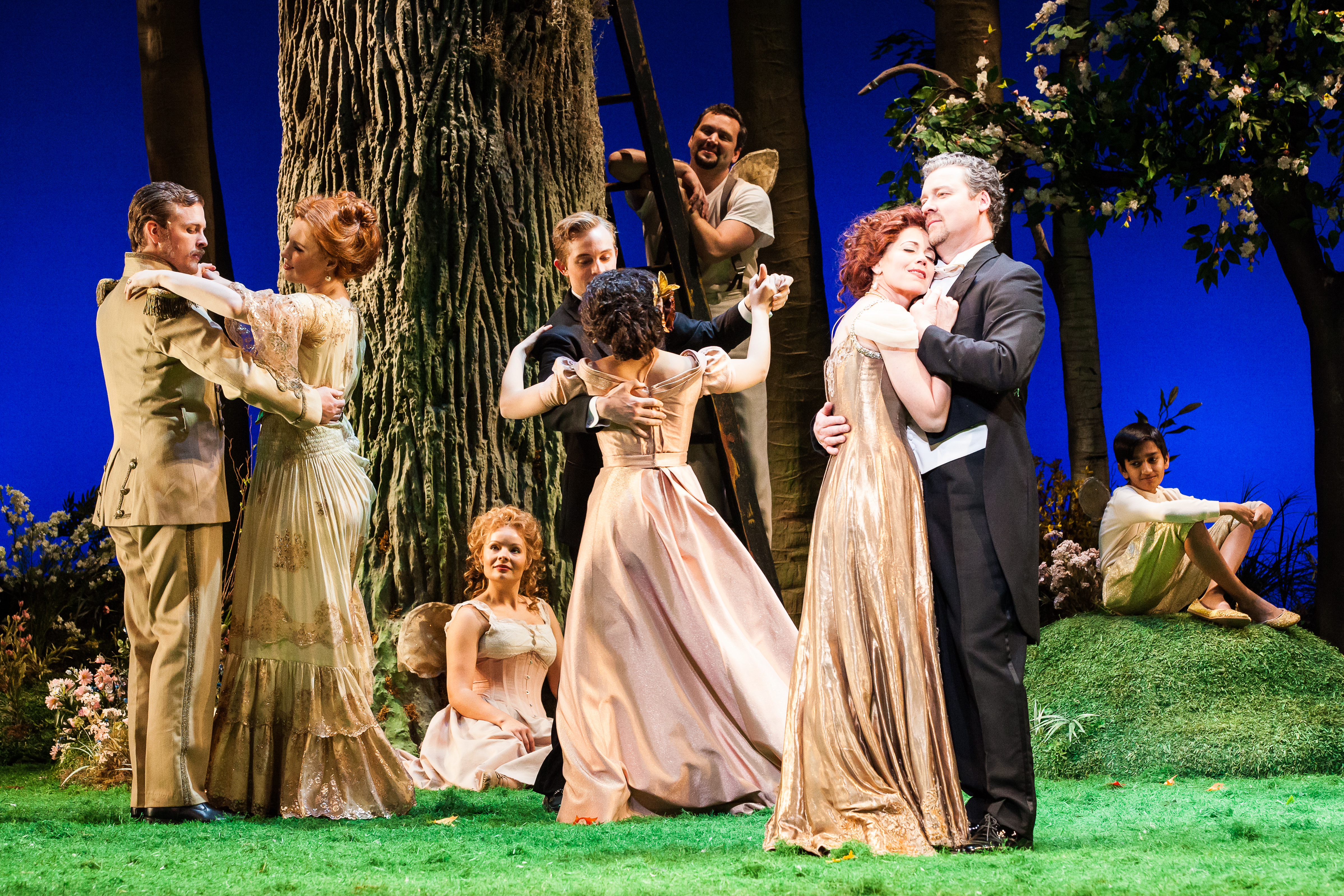
This production might be the best comprehensive piece in HGO’s season so far—the set and singing linked seamlessly. Conductor Eric Melear’s hands danced over Sondheim’s enduring score, capturing the easy essence of language in musical form while the backdrop shifted from bright azure blue to hazy oranges and yellows, cozy greens and brilliant purples. The costumes, cream to begin and flashy gold to end, were the ideal aesthetic pairing to the scenery. Let’s hope we see more from Isaac Mizrahi’s vision for opera in production, set, and costume design.

It is rare but refreshing when a company achieves that level of excellence where everything feels effortlessly stunning. It helps that HGO decided to use the smaller Cullen Theater—I wish the Britten chamber operas had also been moved next door. HGO’s A Little Night Music comes about as close to “just right” as a company can get.

A Little Night Music runs through March 23. For more information or tickets, check out Houston Grand Opera’s website.

Robert Ashley, 1930-2014

“There is only one Self. That Self is

Light. The Self is ageless.”

Robert Ashley died yesterday, March 3, at his home in New York. Articles popping up about it emphasize that Ashley was underappreciated and misunderstood. I had not heard of Ashley until I began graduate school. After listening to five minutes of Purposeful Lady Slow Afternoon, a solo piece for voice composed in 1971 about sexual abuse, I had the rare feeling one gets only a few times in life: that I had heard something that was going to change how I perceived the world. It might sound cliché, but it’s true, what people are saying, that Ashley’s genius was ahead of his time.

As part of my research lately, I’ve been obsessing over Ashley’s television opera Perfect Lives. It’s an opera that captures American consciousness focusing on its characters more than a plot, though it travels through a park, a bank, a supermarket, a church, and into a friend’s backyard. In Kyle Gann’s biography he cites an interview in which Ashley announced Perfect Lives is “meant to be…seen by two people sitting on a couch, having a drink, occasionally a snack, occasionally going to the toilet, finally giving up and going to bed because of a hard day of work.” How refreshing, to think of opera as accessible to anyone with a television and to knock it off its bourgeois pedestal. How refreshing, to think of opera as basically human.

That opening quote is from the fourth episode of Perfect Lives, “The Bar (Differences).” Reading it now, I know it will always coalesce differently for me:

“And things in general are still

Foggy.

I brought up this idea, the idea of

The Tree of Life,

To have something to compare the Self to. We were

Talking about the Self.

We said the Self is without coincidence

Being singular.

We said the Self is without attainment

Being perfect.

And we said the Self is ageless being

What I don’t know.

The word eternal is a mystery to me.

I don’t understand that word.

I can’t say the Self is ageless

Being eternal,

So, I have to find another way of seeing, another way of

Understanding that the Self is ageless…”

Robert Ashley, with glitter in his hair, performing Perfect Lives

Intermission: Get Your Glass On

Need an opera fix between productions at Houston Grand Opera and Opera in the Heights? Do you have five hours and a good internet connection? Generously, Théâtre du Châtelet’s production of Philip Glass’, Robert Wilson’s, and Lucinda Childs’ Einstein on the Beach is free to stream online.

I first experienced Einstein in Mexico City at the Palacio de Bellas Artes (the origin of the banner above) in 2012. Watching a video is, of course, not the same as actually being enveloped by this opera, but it is a rare treat to see in any form. Through blazing beams of light and shocks of red, grand trains and mystical spaceships, singers and dancers in crisp white shirts and suspenders deliver repetitive melodic cycles of movement and libretto for about five uninterrupted hours. Entering this opera means entering another time dimension entirely. Labeled as non-narrative, musicologists tend to think of Einstein as the peak of modernism for Glass; even without a defined plot, it captivates unlike anything else out there.

Most of Houston is already shut inside under a pile of blankets watching bad television and waiting out this cold snap. What’s an afternoon spent enjoying a magnum opus of twentieth-century opera that radically redefined the genre altogether?

Grab a sandwich and settle in: click here for Einstein.


“You’re special, baby”: 1960s Don Giovanni at Opera in the Heights

Photo by Amitava Sarkar


What does Mozart’s 1787 Don Giovanni look like in 1960? Sure, a lot of opera productions don’t stick to the period in which an opera was actually written. But Opera in the Heights’ Don Giovanni embraces 1960 from the set and costumes to even the English subtitles projected above the stage. Lines like “You’re special, baby” drew mixed reactions, I noticed looking around. Sometimes Mozart’s score felt mis-matched against Don Giovanni bragging “I’ll rock your world.” But as I overheard in a debate at intermission, “Yeah, but a player is always a player.”

Peter Sellars’ famous re-setting of Don Giovanni in the Spanish Harlem ghetto of New York City has always been a favorite of mine. Last night, with Donna Anna dancing lasciviously and chugging Jack Daniels followed by Masetto’s crew sporting tight jeans and leather jackets, it was like a mash-up of provocative Sellars and West Side Story.

I find Donna Elvira less deranged and more admirable, although opinions vary. Making both an OH debut and a role debut as Donna Elvira, Soprano Julia Cramer (Ruby Cast) struck just the right character balance. While Donna Elvira is a bitter, spurned lover, she also inspires some sympathy. I’ve always been impressed, rather than disappointed, that she recognizes Don Giovanni for the cad he is and still loves him to the end, vowing to spend her days in a convent after he is pulled down to hell.

The updated libretto took a few liberties with Elvira, stating Don Giovanni had left her pregnant instead of ambiguously “shamed.” But even without this added touch, Cramer’s voice would have pulled anyone over to her side. She’s a sharp singer with a warm timbre and versatile ability to change emotional tone—she conveyed the whole spectrum of Elvira’s multi-dimensional character expertly.

The singing at OH just keeps getting better. I was excited to see Michelle Johnson return as Donna Anna. I first heard Johnson singing the part of Leonora in Il Trovatore a few seasons ago. Her voice was memorable then, but has since blossomed into a force. As a soprano, Johnson proved last night she’s about to rock the opera world with a new kind of powerful presence. As her unfortunate fiancé Don Ottavio, Zach Averyt’s tenor voice was out-matched by Johnson. While his vibrato was a bit too wide, he got the cowardly sentiment of Ottavio just right. Also making an OH debut and a role debut as Don Giovanni, baritone Brian K. Major ruled as equally sexy and despicable. Major sings without reserve—full-bodied and broad—but also proved to be a captivating actor.

Bass-baritone Justin Hopkins, in the part of Leporello, stole this show. Although I’m morally opposed to shameless conquest counting, “Madamina, il catalogo è questo” is always a Don Giovanni high-point for me. Ripping off names in a rolodex and tossing them across the stage, Hopkins didn’t disappoint. His voice is unlike any other bass-baritone I’ve heard: a thick, rich timbre that is surprisingly light and flexible. Whether it was dancing over fast libretto or a sinking into a slow passage, Hopkins made it look easy.

Artistic director and conductor Enrique Carreón-Robledo is catching Houston’s attention for a reason. Generally, I don’t like to compare OH to Houston Grand Opera. I’ve written before about the intimacy that sets OH apart and their commitment to fostering up-and-coming artists. The companies are altogether different. That said, thinking of the Rigoletto I saw last week at HGO, there were moments last night when the singing was so spot-on, the passion so heightened, that OH could give HGO a run for its money.


Don Giovanni at Opera in the Heights runs January 31 – February 9. For ticket info, check out their website, and be on the alert for their season-closer Lucia di Lammermoor which opens March 28.

Smashing Third Act: Rigoletto at HGO

https://dl.dropboxusercontent.com/sh/fveee3dit0mvwyn/iVtArJqIqA/Houston%20Grand%20Opera%20-Rigoletto%20-%20Photographer%20Lynn%20Lane-92.jpg?token_hash=AAG2x5nSWAcKDVdQNBRdr3vsvgRYkVEKG8zWoeH6SBm1pg
Photo by Lynn Lane


Verdi’s Rigoletto is built to be great. Love, revenge, and murder supported by an expert score that anticipates every nuance on stage makes this opera not only beloved, but practically fool-proof. Houston Grand Opera’s Rigoletto, a co-production with The Dallas Opera, leans on the inherent strength of this opera a bit too much. While the singing and set elicited a shrug, a breathtaking third act finally showed HGO’s talent for Verdi.

As if in a whirlwind of genius, Verdi wrote this opera in forty days. Knowing how successful it was going to be, he even withheld the famous “La Donna e Mobile” aria until right before the performance so that it wouldn’t get leaked. And, as he predicted, it blew his audience away at the 1851 premiere in Venice.

The plot is timeless: A barefaced womanizer, the Duke of Mantua runs through as many women in a day as most people do cups of coffee. One woman, after being tossed out by the Duke, dies of shame, and her father flies in a rage to confront the Duke. He is, instead, greeted by the teasing Rigoletto, and the father hurls a curse on his head. The curse works through the second act, and at the close, Rigoletto is holding the dead body of his own daughter—a scene that rarely fails to evoke sensational agony.

Whether due to the cold snap or the quick casting change, the singing was average. Bass-baritone Ryan McKinny, in the title role of Rigoletto, struggled a bit to project. As Kurwenal in Tristan and Isolde last season his voice was an absolute force, but as Rigoletto, his voice and acting came off as stuck. Due to personal reasons, Elizabeth Zharoff was replaced by Uliana Alexyuk as the angelic Gilda. Alexyuk captured the purity of Gilda well—a soprano with a unique bell-like quality—but apart from some supreme high notes, her notes were often flat and her acting without animation.

The exception was Stephen Costello, who ruled brazenly as the Duke of Mantua with a tenor voice of steel. Normally, when a handsome but unprincipled Duke tries the pick-up line “Love brings us closer to angels,” it’s going to end with a drink in his face. Not so with Costello’s voice, which has a golden timbre hard to resist.

The set was underwhelming. An accordion frame-work of squares set the stage. A two-story box rolled in from one side in the second act as Rigoletto’s apartment and from the opposite side in Act Three as the assassin Sparafucile’s shack. The lighting shifted from dim blues, yellows, and reds unremarkably. The most stunning visual effect came in the first few minutes when, during the overture, a shockingly red box opened up in the middle of the stage where Rigoletto was leering at himself in a giant mirror. It set the whole mood of the opera—a violent glimpse of inner consciousness that comes to fruition, finally, in Rigoletto’s closing lines “weeping my life’s blood behind the jester’s mask.”

The last scenes, set off by ominous chimes, revitalized this opera. Conductor Patrick Summers consistently proved his expertise throughout, but here especially, when the emotional mood is already so delicate but charged. When Rigoletto dragged the body bag across the stage, still ignorant his daughter had taken the place of the Duke inside, the chorus hummed that chromatic line so eerily alongside the strings in the same melodic arc that I actually shivered. Whether it was Verdi’s initial genius or the work of this production, the third act—exceptional, despairing, ethereal—was absolutely smashing.

You can catch Houston Grand Opera’s production of Rigoletto January 24 – February 9. For tickets and more info, check out their website.

HGO’s Arresting American premiere: Weinberg’s The Passenger

Photo by Lynn Lane

A beautiful thing is not always easy to watch. Houston Grand Opera opens the new year with the American premiere of Mieczyslaw Weinberg’s The Passenger –a story that moves from a pristine ocean liner to an austere scene in Auschwitz. The program notes describe it, aptly, as “draining” and “unrelenting.” Even so, I noticed more people stayed to watch the final act of The Passenger than had lasted in the more digestable Die Fledermaus earlier this season. There’s a lot of talent and passion behind HGO’s production:  for such a traumatic narrative, it proved aesthetically arresting.

A tattered black curtain opens on a bright, white ocean liner where Liese, a former SS officer, catches a glimpse of another passenger. Her husband Walter, a German dignitary, confronts his panicked wife, and she confesses her past and her fear that this passenger might have been her prisoner from Auschwitz. The scene moves back in time to Auschwitz where a doomed love story between two prisoners, Marta and Tadeusz, ends with a wrenching aria about forgiveness, forgetting, and everlasting memories of suffering.

The singing is superb. As Liese, Michelle Breedt is an example of what a mezzo-soprano should sound like: warm in her lower register and rich at the top of her range without ever sounding strained. Soprano Melody Moore, singing the part of Marta, has depth behind her voice that was necessary to portray this character. Her final aria was exquisitely controlled, yet emotionally unbarred. Making his HGO debut in the role of Tadeusz, baritone Morgan Smith made me wish Weinberg had written more for Tadeusz. While some baritones’ timbre can easily become muddled, Smith’s voice rang out consistently with strapping purity.

The visual is divine. Hats off to the creative team behind this production. The stage is divided between the stark silver chrome of the ocean liner above and the dark dismal reality of a concentration camp below, making the quick shifts in time smooth. Lighting Designer Fabrice Kebour deserves special accolades. Rows of spotlights moved like a grid accented by fog that set, rather incredibly, the emotional stage behind the visual. It was class to the core: there was nothing that looked like kitsch, which is more than I can say for the music.

Weinberg’s score is not great. The music that situates the ocean-liner aurally is best described as something that is supposed to resemble jazz. When time shifts back to Auschwitz, the score looks to folk music and Yiddish motifs that feel over-determined. It seemed a bit clever that the strings moved in parallels when the prisoners sang their personal stories, but the score felt overworked in its representation of the narrative, and missed, somehow, setting the characters apart musically in their arias.

In no way did this reflect poorly on the orchestra, though. Conductor Patrick Summers was more animated and enthusiastic than I’ve seen this season. The strings melted the air, especially in the reduced chamber moments. Walking bass and saxophone, despite the lackluster score, managed to insert a disconcerting peppiness to contrast with the horrifying reality of Auschwitz.

Finished in 1968, it’s taken a while for The Passenger to see the stage. Violent scenes, like when a female prisoner is brutally beaten by a group of male SS officers, do not make for light entertainment. While the score and libretto are flawed, the opera stands as an important cultural piece and opens up a narrative that is hard to watch, let alone discuss in an artistic medium. On leaving, I admit I felt frustrated by Weinberg’s score until I noticed a woman still staring at the stage with tears running down her cheeks. Despite the opera’s structural flaws, HGO’s skillful execution of The Passenger calls for pause.


The Passenger runs January 18 – February 2. For information and tickets, visit Houston Grand Opera’s website.


“It’s Dynamite!”: Ashley’s Mixed Blessings, Indiana at Roulette

Although I should expect it by now, the voice in Robert Ashley’s compositions always catches me unaware and unprepared. Last week, I took a quick trip to New York to hear his latest work at Roulette on Wednesday, December 11. A world premiere, Ashley’s Mixed Blessings, Indiana threw the voice as an instrument onto new compositional ground, continually growing in urgency and building in layers until a burst of light and sound brought closure, showing yet again why Ashley is a foremost composer of our time.

The Swiss trio Ensemble Tzara performed Ashley’s composition, which was bookended by David Sontòn’s La metta da fein and Timothy McCormack’s Interfacing with the Surface, both US premieres. In the middle of these exceptional instrumental pieces, Ashley’s use of the voice was especially set off—to hear a performer’s voice, suddenly, changed my perception of the whole concert. The trio is made up of horn player Samuel Stoll, cellist Moritz Müllenbach, and synthesizer player Simone Keller. Although Ashley’s use of voice tends toward the emotionless, hearing each performer’s voice added a sense of the human to a radically electronic, futuristic sound.

Open, sustained notes in cello and synthesizer began the piece, acting as a foundation for the first vocal part. As the work progressed, all three performers rotated in 16 sequences of speak-singing at the microphone in the center, continuously shifting the instrument color and voice timbre. Understated rhythm from the synthesizer, especially, added texture to the underlying chords.

Ashley created the text from a random set of leaflets advertising books in today’s trivial American literature. The resulting hissing and cracking of consonants was the Rhaeto-Romanic translation of book titles, authors, abstracts, hard- and soft-cover numbers, e-book numbers, and empostazium labels from the randomly-selected set of leaflets. At the first instance of the heavily accented “E S B N”  and “W W W punckt!” I heard a ripple of laughter, but the performance took a more serious turn with a lighting shift from soft blue to green that marked Keller’s first turn at the microphone.

Because the voice plays such an intricate role in Ashley’s compositions, the choice of performer—the individual timbre of a voice—is critical. Not just anyone can perform a given part. Each performer in Ensemble Tzara had a distinct, select tone that danced over the heavy language. The initial switch from Stoll to Müllenbach, for instance, felt drastic. Stoll spat out words vengefully, while Müllenbach spoke calmly in a profound, monotone voice that slowly developed into a more urgent tone conjuring visions of enchantment or incantation.

Stoll and Müllenbach took several turns at the microphone before Keller did, adding a sense of intentionality to her voice. Once all three voices were in the mix, rotations happened more quickly, more seamlessly. The lighting shifted at what felt like a faster rate until a marked change to red at the end. The sequences began to blend, somehow, coming together finally (but remarkably, I had to remind myself, still remaining separate) in a genius, closing chord.

The following night I caught Tchaikovsky’s Eugene Onegin at the Met—naturally a drastic change from Ashley’s work, but I found myself thinking more about Mixed Blessings, Indiana than listening to the supple soprano voice of Marina Poplavskaya. I will never forget the first Ashley opera I encountered, That Morning Thing, and how it changed my perception of opera as a genre that can be familiar, approachable, unpretentious, and overall, deeply American. As I left Lincoln Square, the last thing I heard at Roulette the night before coalesced: Ashley buoyantly asserting across the theatre “It’s dynamite! It’s retro-disco!”


Check out press pieces, videos of Ashley’s work (including my favorite, That Morning Thing), his biography, info about upcoming performances, and almost anything else you might want to know about Ashley at his website: robertashley.org