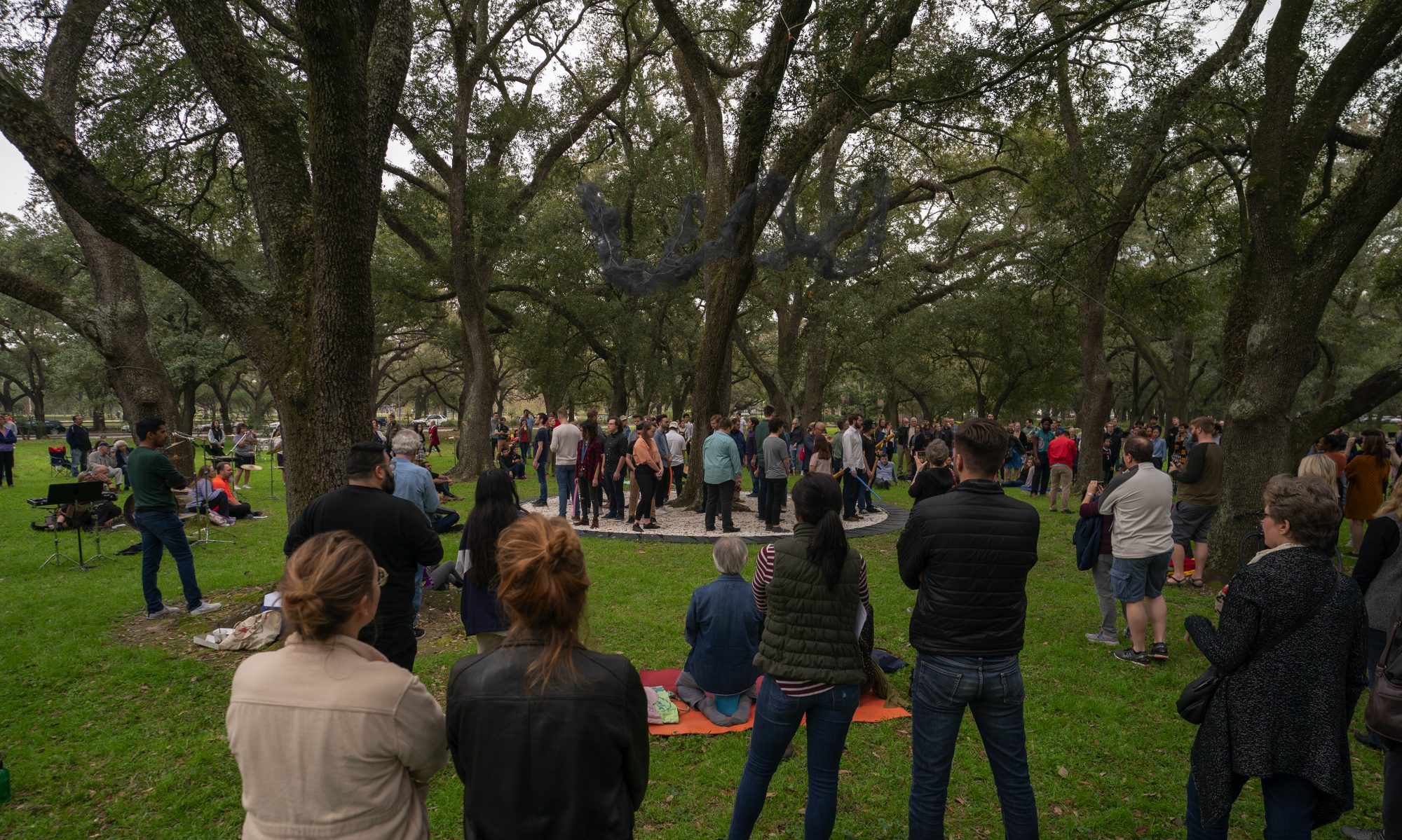
I have a lot of memories of this work, and with an opera company at the helm, it was a refined performance. But the thing I’ll remember probably won’t be the music (Sasha Cooke, resilient hero, my hat is off to you). Read my review at Houstonia.
Nixon in China, Trump in America
On Inauguration Day, this opera hit close to home. Read my review at Houstonia Magazine.
HGO’s Season is Here!
And it opens with two contrasting (I use the term lightly) operas. I felt pretty indifferent to Donizetti’s Elixir of Love–in and of itself as an opera, it’s kind of inconsequential–but Gounod’s Faust! That opera is built for greatness. It was beautiful. A simply exquisite experience overall. You can read my reviews of Elixir and Faust at Houstonia Magazine.
Houston’s Opera Season
…is almost here! Read my notes about HGO’s annual Studio Showcase and what it tells us to expect from the season at Houstonia Magazine.
What Trios They Were
In the Ensemble Theatre this morning at the world premiere of What Wings They Were: The Case of Emeline, I began to think about the advantages of a three-person opera.
A historical recount of a civil case Emeline, a “free woman of color,” brought against Jesse P. Bolls in 1848 Houston, Houston Grand Opera’s (HGOco) What Wings They Were is a moving story told by soprano Gwendolyn Alfred, bass-baritone Christopher Besch, and tenor Brian Yeakley.
Composer John L. Cornelius II creates a wonderful score for the piano, performed with purpose and feeling by music director Bethany Self, but the vocal parts seemed separated from their accompaniment and even from one another. Any opera buff will admit to a love of ensemble numbers, traditionally the satisfying climax of an act (my favorite is the sextet “Chi Mi Frena in al Momento” from Donizetti’s Lucia Di Lammermoor), but with newer operas these ensemble numbers have fallen out of the repertoire somehow. Give me some cohesive harmony, some sense of melodic arc—good ensemble can still feel original, no one has condemned it with the old-fashioned stamp.
Three singers translate into opportunity for some rousing ensemble numbers. Bastien and Bastienne, a comedy Mozart wrote when he was only 12 in 1768, for example, has some beautiful duets and ends with a triumphant trio. In the same vein, Donizetti’s Rita, a comedy written in 1860, is ripe with jaunty duets. On the other hand, consider Stewart Wallace’s three-cast Hopper’s Wife, which makes its east coast premiere at the New York City Opera this weekend. The opera assigns a different singing genre to each character (and one character spends a good part holding her own in the nude). Mark Swed of the LA Times calls it “brave” in the realm of American opera for realist historical drama, though he stresses it’s also “not a particularly likable opera and certainly not nice.”
What Wings They Were: The Case of Emeline tells an awe-inspiring true story of a woman who sued for her freedom, and for the freedom of her two children, and won. Doesn’t such an incredible story deserve an equally galvanizing trio to ignite its victorious finish? Must new opera sound so isolated?
Fear in Future Past

Carlisle Floyd’s Prince of Players
Promising lush music, a wicked plot, and fabulous costumes, the great American composer’s world premiere opens at Houston Grand Opera on Saturday. Read my preview at Houstonia Mag.
Weekend Music: Rusalka and Schumann
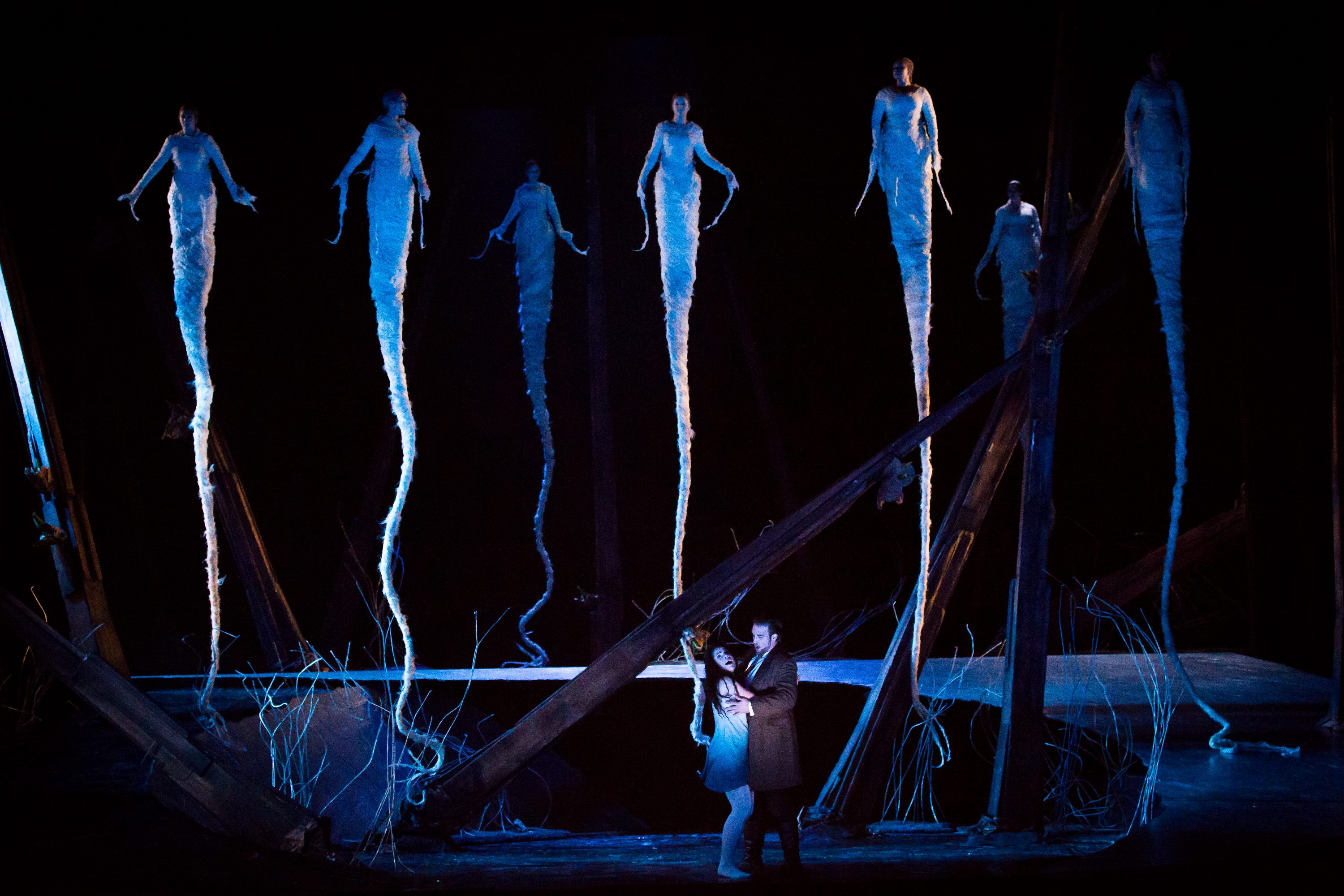
I readily admit I was a big fan of the Little Mermaid when I was young–not just the Disney film but the darker, unhappier fairytale versions too. Houston Grand Opera’s Rusalka brought the fairytale happily into my adulthood on Friday. Saturday night was a mixed bag at Jones Hall. I don’t expect I’ll hear anyone play Schumann’s violin concerto again any time soon, and I’m not sure I mind.
Read both of my reviews at Bachtrack: the opera; and the symphony.
“HGO wastes a Figaro”
…read my review at Bachtrack.
A Charmed Little Prince at HGO
It was a quite a sweet holiday opera, minus a Rose. Read my review at Bachtrack.
 Sydney Boyd