Two phenomenal artists are coming together on Tuesday night in a concert filled with Britten and Dowland song cycles. Nicholas Phan, a spectacular tenor, is no stranger to Houston. From 2002-2005, Phan was a Houston Grand Opera Studio Artist. After his appearance here in January, he will return to close HGO’s season in the role of Tobias Ragg from Sondheim’s Sweeney Todd.
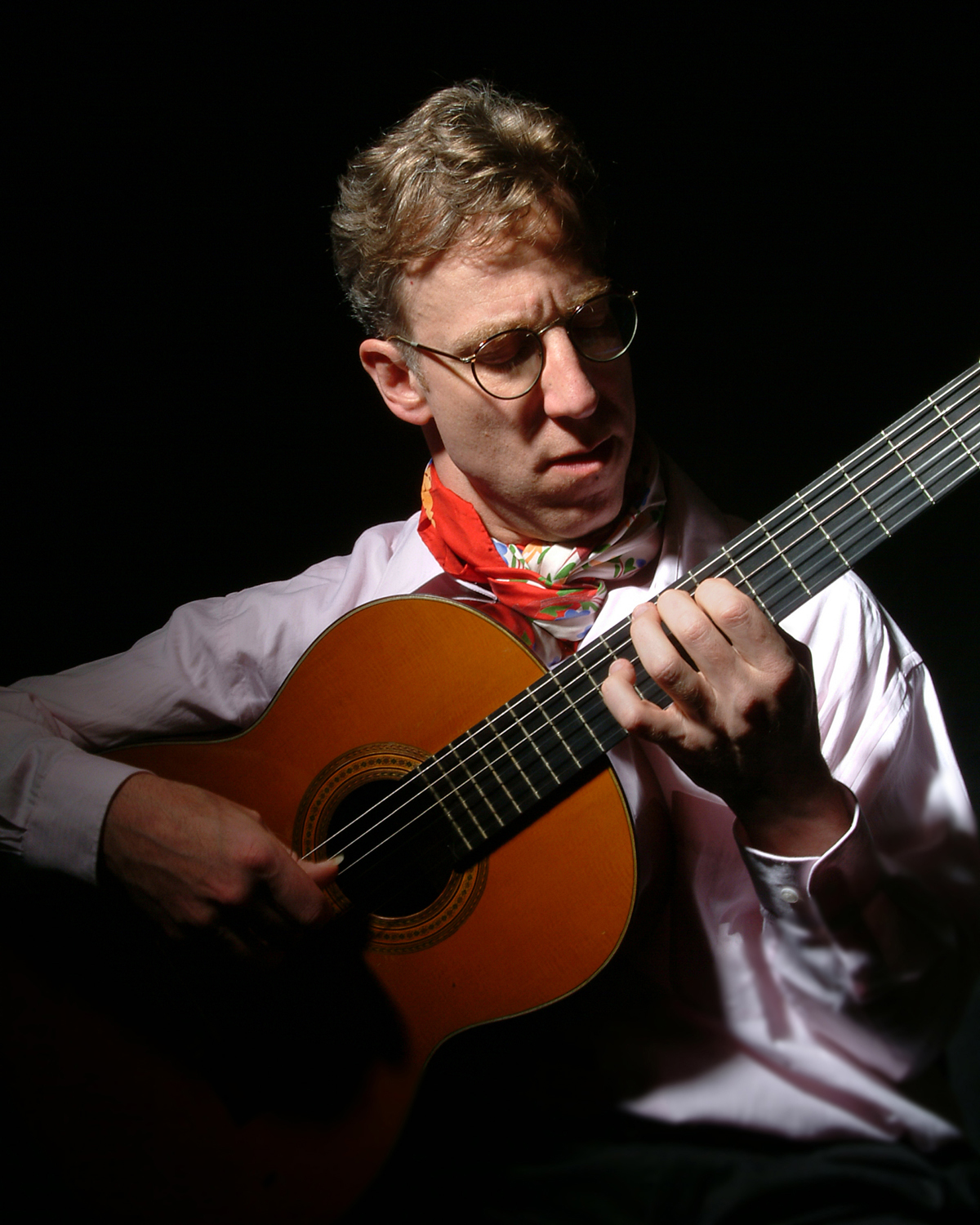
He is joined by Eliot Fisk, a musician who has long been a hero of mine and who is widely considered to be the best classical guitarist in the world. I had a brilliant time speaking to them both and not nearly enough space to do them justice. Read my preview of Tuesday’s concert at Houstonia Magazine.
Their concert is Tuesday, January 27 at 7:30pm in the Menil Collection. For tickets and more info, visit Da Camera of Houston.
HGO premieres A Christmas Carol with music by Iain Bell and libretto by Simon Callow. It is the worst kind of bad–a boring bad. Read my review at Houstonia Magazine.
In happier holiday news, read my Top 5 classical and opera picks of 2014, also at Houstonia. Cheers to a merry 2015!
As the summer opera-hiatus drags on—alas, will October never arrive?—a few notes:
Opera is not far away! Alex Waterman directs the late Robert Ashley’s Vidas Perfectas over two weekends in west Texas. Vidas Perfectas is a Spanish iteration of Ashley’s seven-episode television opera Perfect Lives that premiered in the 2014 Whitney Biennial in New York this spring. It is perhaps his best-known work—a composition that pushes feverishly against traditional and stuffy attitudes about opera to focus on the American vernacular and, most of all, American storytelling. Catch the first four episodes in El Paso on July 12 and the final three in Ciudad Juárez on July 13. The tour moves to Marfa for another two performances on July 18 and 19 (for more info, check out Ballroom Marfa). I’m catching the last night—look out for a review—and you can also watch video recordings of all the episodes (previously filmed in February) here.
Photo by Lynn Lane. Iain Paterson as Wotan, Meredith Arwady as Erda, Andrea Silvestrelli as Fafner, Stefan Margita as Loge, Kristinn Sigmundsson as Fasolt
What is a total work of art? Those familiar with Richard Wagner will jump in first to correct the English with the German “Gesamtkunstwerk” and describe, starry-eyed, Wagner’s vision of a totalizing performance space in which all the arts—architecture, music, poetry—are perfectly fused. But Houston Grand Opera’s Das Rheingold, a co-production with Palau de les Arts Reina Sofia, Valencia, and Maggio Musicale, Florence, makes me wonder if we ever really understood a total work of art until now. Extraordinary doesn’t even begin to describe the experience.
Das Rheingold is the first in Wagner’s epic tetralogy, the Ring Cycle. This opera lays the narrative foundation. As its title suggests, Das Rheingold establishes where the magical gold originates, how it gets forged into a powerful ring, and how it portends the inevitable demise of the gods and Valhalla.
What you might not expect, though, is that this production also establishes that the two giants, Fasolt and Fafner, are supported by 800-pound cranes that come from the same metal shop as Sigourney Weaver’s fighting machine in Alien, and that Loge, the god of fire, is a devil with a Segway. Don’t be surprised to find yourself pondering factory farming as golden forms, hung by their heels, are rolled across the background in an assembly line or reminiscing about the Matrix as golden embryos are packed and sealed against a complex set of data and industrial piping. And I haven’t even gotten to the acrobatics, fire breather, and flying fish tanks yet.
Individually, these elements would be strange (although Loge on a Segway is a stroke of genius no matter what). What set designer Roland Olbeter, costume designer Chu Uroz, lighting designers Peter van Praet and Gianni Paolo Mirenda and video designer Franc Aleu have made together is no less than a visual artistic masterpiece. Architecture: check.
The vocal cast is a power house. The three Rhinemaidens, Andrea Carroll, Catherine Martin, and Renée Tatum, open the opera with a trio de force while still managing to seductively splash around in square, suspended tanks. Baritone Christopher Purves, in the role of the unsightly Alberich, dances around below them while exemplifying vocal agility. As Fricka, mezzo-soprano Jamie Barton tears it up with a voice full of passionate steel. Iain Paterson reigns as Wotan with a mighty bass-baritone—forceful and commanding.
Most memorable of all, tenor Stefan Margita offers an invigorated interpretation of Loge, and it’s not just because he’s floats around the stage on mechanized wheels. Costumed in a shiny white cape lit up with red LED bulbs, Margita leaves an impression. Das Rheingold is the only opera of the Ring Cycle in which Loge plays a major role (later you’ll briefly see him set a ring of fire around Brünnhilde and, later still, light up Valhalla), and it’s a shame. Margita sings purposefully without it feeling purposeful. He is such a good performer it is easy to forget he’s acting. The tenor timbre that so rarely even borders on the fullness that baritones achieve, is, for Margita, a given of breadth and sophistication. I’m tempted to say he is a total work of art himself.
And the orchestra, conducted by the indefatigable Patrick Summers, captures Wagner’s ideal: although there were a few horn blunders, I hardly cared because the score was practically unnoticeable as a separate entity. Music: check.
But the most pressing reason this production redefines Gesamtkunstwerk is that there is poetry in the experience I can’t put into words. It envelopes you and transports you to another land in another time as only a true total work of art can.
Das Rheingold runs April 11- April 26, and many shows are already sold out, so book it now and don’t miss this singular production.
Whose voice do you hear singing “Send in the Clowns?” It has to be Barbra Streisand, doesn’t it? Maybe it’s the more classic Judy Collins or Frank Sinatra. Perhaps the original takes the cake, Glynis Johns? The flashier Judi Dench or Cher? Maybe even The Simpson’s season four rendition by Krusty the Clown? Arguably the best known ballad from Stephen Sondheim’s A Little Night Music, this crowd-pleaser is bound to pick up any show if it has fallen flat. But Houston Grand Opera’s production, created by Opera Theatre of Saint Louis, is superb from the start.
A Little Night Music toys with a rotating trio of mismatched couples. Fredrik, married for the second time to the innocent and much younger Anne, loves the glamorous actress Desiree. But Desiree is having an affair with the high-strung Count Carl-Magnus Malcolm, who is married to the depressed but devoted Countess Charlotte. And Fredrik’s strapping son Henrik, a seminary student no less, is in love with his step-mother Anne—a twisted situation he has no problem gasping about in guilt.
Above all the coy and jealous games, though, A Little Night Music is about women: wives, mothers, step-mothers, daughters, and grandmothers drive this musical. Familiar tropes of working mothers appear early with “The Glamorous Life,” in which Desiree’s young daughter Fredrika sings “Ordinary mothers lead ordinary lives / Keep the house and sweep the parlour / cook the meals and look exhausted” before revealing her mother is anything but the norm, packing and unpacking constantly to keep up her theatre career on the road.
There was no end to the impressive female cast: Soprano Elizabeth Futral, singing the role of Desiree Armfeldt has a deep, smoky tone that won’t let you down—her “Send in the Clowns” held its own against the sea of other renditions. As the virginal Anne, Andrea Carroll wasted no time in showing off her soprano chops—bell-like and unwavering, Carroll’s voice carried across the theatre with charming grace. Mezzo-sopranos Joyce Castle and Carolyn Sproule as Madame Armfeldt and Countess Charlotte Malcolm respectively, each stole a part of the show—especially Sproule’s “A Little Death” that coursed with expression. And as little Fredrika, Grace Muir will be a singer to watch—she was pitch perfect and consistently delightful.
But the men still managed to make an impression. While baritone Mark Diamond played the stuffy part of Count Carl-Magnus Malcolm flawlessly, his voice—a dreamy combination of strength and divine vibrato control—brought unexpected sexiness to his uptight character. Chad Shelton, in the tenor role of Fredrik Egerman, matched Elizabeth Futral’s in charisma. Making his HGO debut as Henrik, Brenton Ryan proved as endearing in character as his voice has talent—he is a tenor I hope to hear again soon.
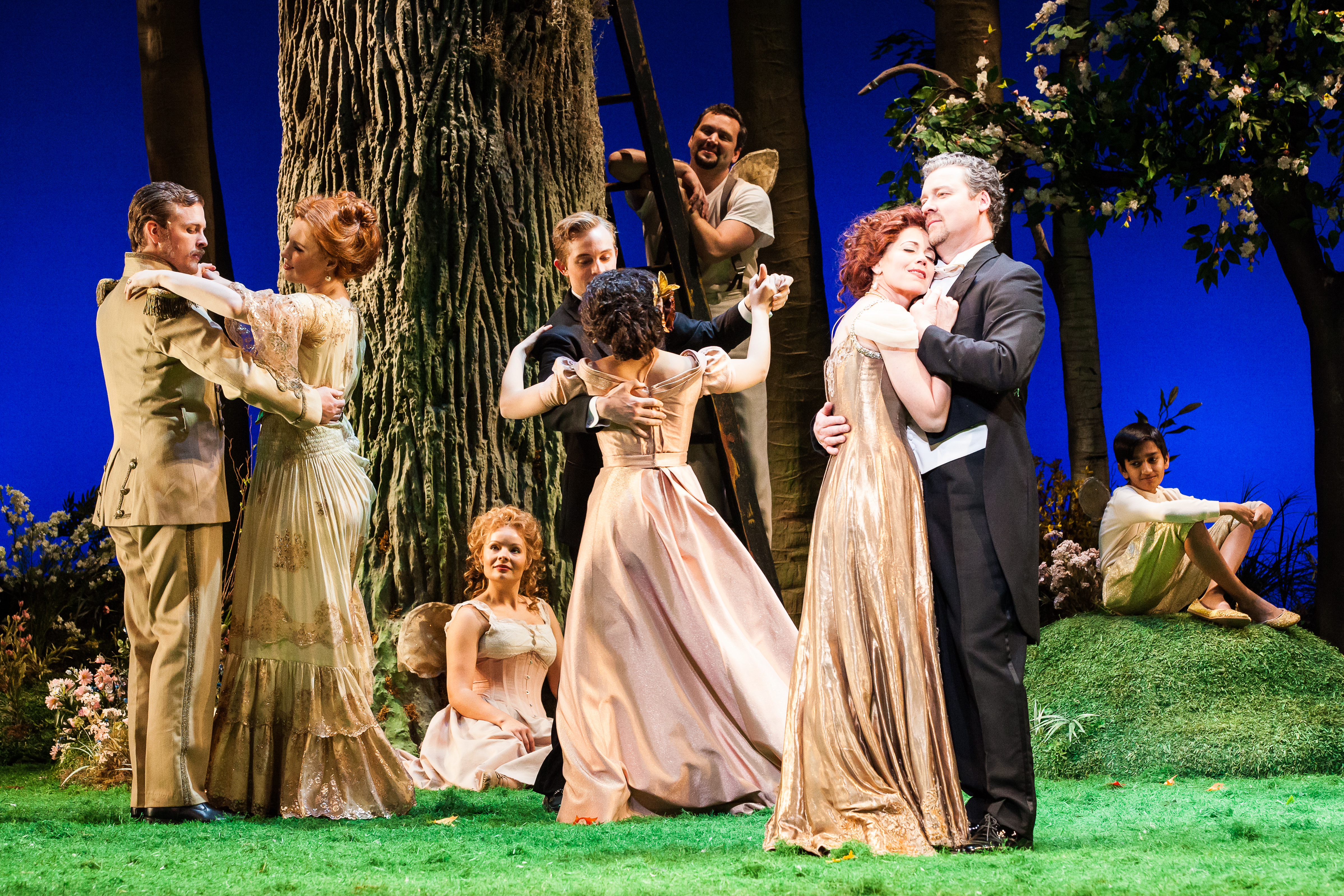
This production might be the best comprehensive piece in HGO’s season so far—the set and singing linked seamlessly. Conductor Eric Melear’s hands danced over Sondheim’s enduring score, capturing the easy essence of language in musical form while the backdrop shifted from bright azure blue to hazy oranges and yellows, cozy greens and brilliant purples. The costumes, cream to begin and flashy gold to end, were the ideal aesthetic pairing to the scenery. Let’s hope we see more from Isaac Mizrahi’s vision for opera in production, set, and costume design.
It is rare but refreshing when a company achieves that level of excellence where everything feels effortlessly stunning. It helps that HGO decided to use the smaller Cullen Theater—I wish the Britten chamber operas had also been moved next door. HGO’s A Little Night Music comes about as close to “just right” as a company can get.
A Little Night Music runs through March 23. For more information or tickets, check out Houston Grand Opera’s website.

 Sydney Boyd