Don Giovanni at Santa Fe Opera

“I am jealous of everything whose beauty does not die,” Dorian Gray laments upon just having seen his portrait. In it, he realizes something worse than mortality—that one day he will grow old and “become dreadful, hideous, and uncouth.” That youth is fleeting and that to be beautiful is worth everything.

In a new production at Santa Fe Opera, director Stephen Barlow has reimagined Mozart’s 1787 opera Don Giovanni as Oscar Wilde’s Victorian gothic novel A Picture of Dorian Gray. Known for his smart use of color and clever aesthetic, Barlow doesn’t disappoint here, but as far as philosophical parallels go, I would wager Barlow watched the movie and didn’t read the book.
In the program notes, Barlow says that he was inspired by a modern film adaptation in which Dorian is holding a briefcase that has the initials DG on it embossed in gold. Yes, their initials are the same, but what else? Rooted in love, loyalty, betrayal, revenge, and sweet justice, Don Giovanni rightfully holds the title as the perfect opera in most circles. The pacing is right, the music is stunning, the plot is timeless. It also doesn’t hold punches. The story begins with Don Giovanni sexually assaulting Donna Anna and then killing her father when he comes to defend her; the story ends with Giovanni burning in hell for his many misdeeds. Morality, above all else, triumphs. 

I’ve always understood it as a rare story of feminism in the midst of so many operatic female characters who wilt away and die. If Don Giovanni becomes Dorian Gray, he assumes a backstory of a mad pursuit for youth and beauty at all cost. How does Giovanni’s decree that “Freedom is our only rule” translate to Dorian’s threat, “When I find that I am growing old, I shall kill myself”? 

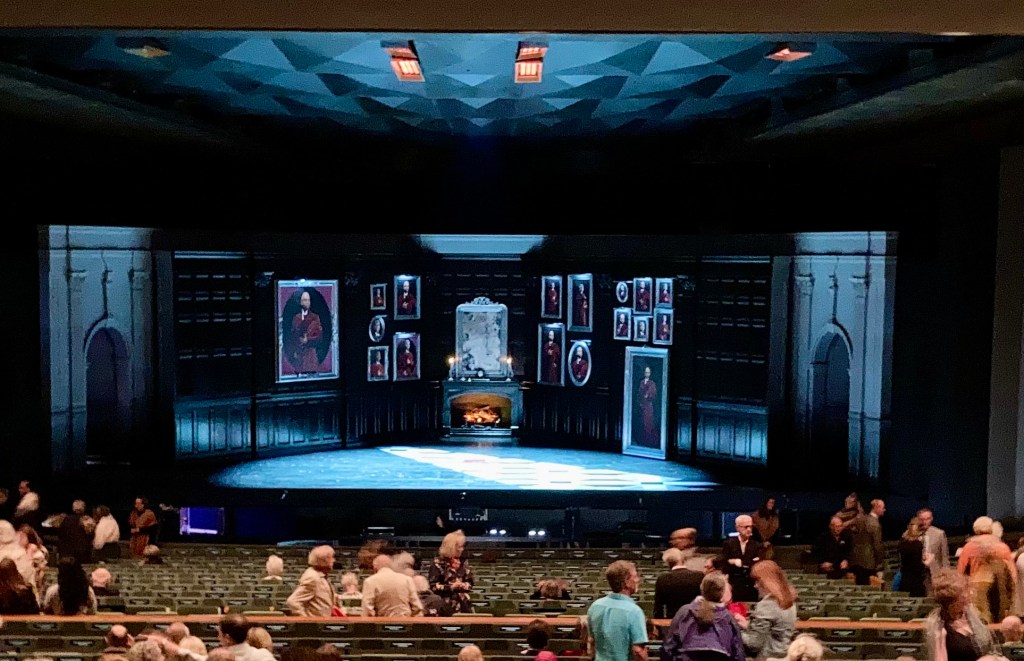
Missing dramaturg homework aside, beauty reigns in this production and in its singing. In the title role, Ryan Speedo Green continues to thrill and develop. I last heard him at the Met as Emile Griffith in Terence Blanchard’s 2013 Champion, a very different opera, and he’s proving to be a singer with range who will stun across styles. The set is creative and cunning in its use of space, with walls sliding to reveal lampposts and ornate wrought-iron fences, sumptuous Victorian hotel lobbies, and Don Giovanni’s portrait-laden den (let’s forget that Dorian Gray hides his portrait for most of the novel) replete with a crackling fireplace. Bright pops of orange and red arise in key plot moments against mostly dark greys and blues. Rachael Wilson, as Donna Elvira, wins the acting prize, and Rachel Fitzgerald, who stepped in at the last minute to replace Teresa Perrotta as Donna Anna, certainly earned her spot on stage in a svelte performance.

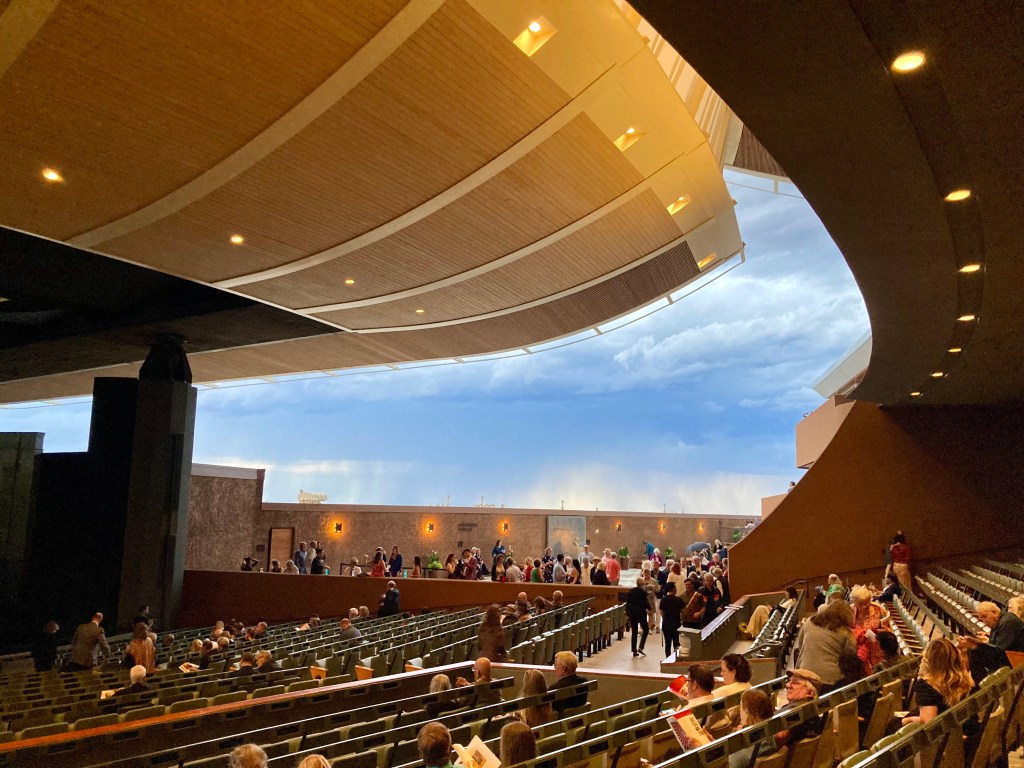
As an open-air theatre nestled in the New Mexico mountains, Santa Fe Opera brings an aesthetic clout unlike any other. Last night, the opera began in the midst of a storm that persisted throughout. Lightening snapped across the sky. Rain drummed around the edges of the stage. As justice ultimately found Don Giovanni, the ethics of it all took a larger frame. Youth may be fleeting, but nature is ever ascendant. 
Calling all Scholars!

I’m proposing a session about my favorite things at the 2018 Modern Language Society  Convention in NYC and I would love to get your proposals! See the call below. (And wide range really means wide range, but if you have questions you can email me too.)

Special Session: Opera and Literature
Throughout the history of opera and literature, the two have overlapped and informed each other. This session welcomes a wide range of papers on the topic. 300-word abstracts by 15 March 2017; Sydney Boyd (sboyd@rice.edu).

Relish the Clemency in OH’s La Clemenza


Celeste Fraser as Vitelia and Zach Averyt as Tito. Deji Osinulu Photography

“I must win the loyalty of my people through love,” sings the beneficent Tito in Act Two of Mozart’s rarely performed opera La Clemenza di Tito. Opera in the Heights bravely took on this neglected late opera and performed it with heart, reminding me that it had been one of Mozart’s most popular operas until about 1830, and perhaps it should be again.

It is another rarity when a sovereign rewards honesty with amnesty, even when a subject confesses to plotting his assassination. And as such, La Clemenza is a plot that relies on the ensemble numbers that are so celebrated in Mozart’s other operas. Watching the Emerald cast—a passionate collection of talented young singers—it was clear they had taken great care of the trios, the quartets, and the chorus numbers.

The early chorus march “Serbate, o dei custodi” led by tenor Zach Averyt in the role of Tito, was full and lively. The fiery trio “Vengo! Aspettate!” between Justin Hopkins, Jennifer Crippen, and Celeste Fraser (which comes when Publio and Annio tell a shocked Vitellia that Tito wants her as a consort) rang together with attention to the harmonic subtleties while also communicating Vitellia’s veiled despair.

Hopkins, a bass-baritone whose full, light timbre as Leporello stole the show in OH’s production of Don Giovanni last season, was a stand out again. Making her OH debut as Sesto, mezzo soprano Vera Savage left an impression vocally and otherwise. The victim of Vittellia’s seduction, Sesto is a desperate man. Sure, we’ve seen trouser roles before—when a female singer dons the character of a man—but have we seen a woman in a trouser role slowly strip off her suit and tie in an act of frustrated passion to stand confidently in only underwear? Savage pulled it off with panache.

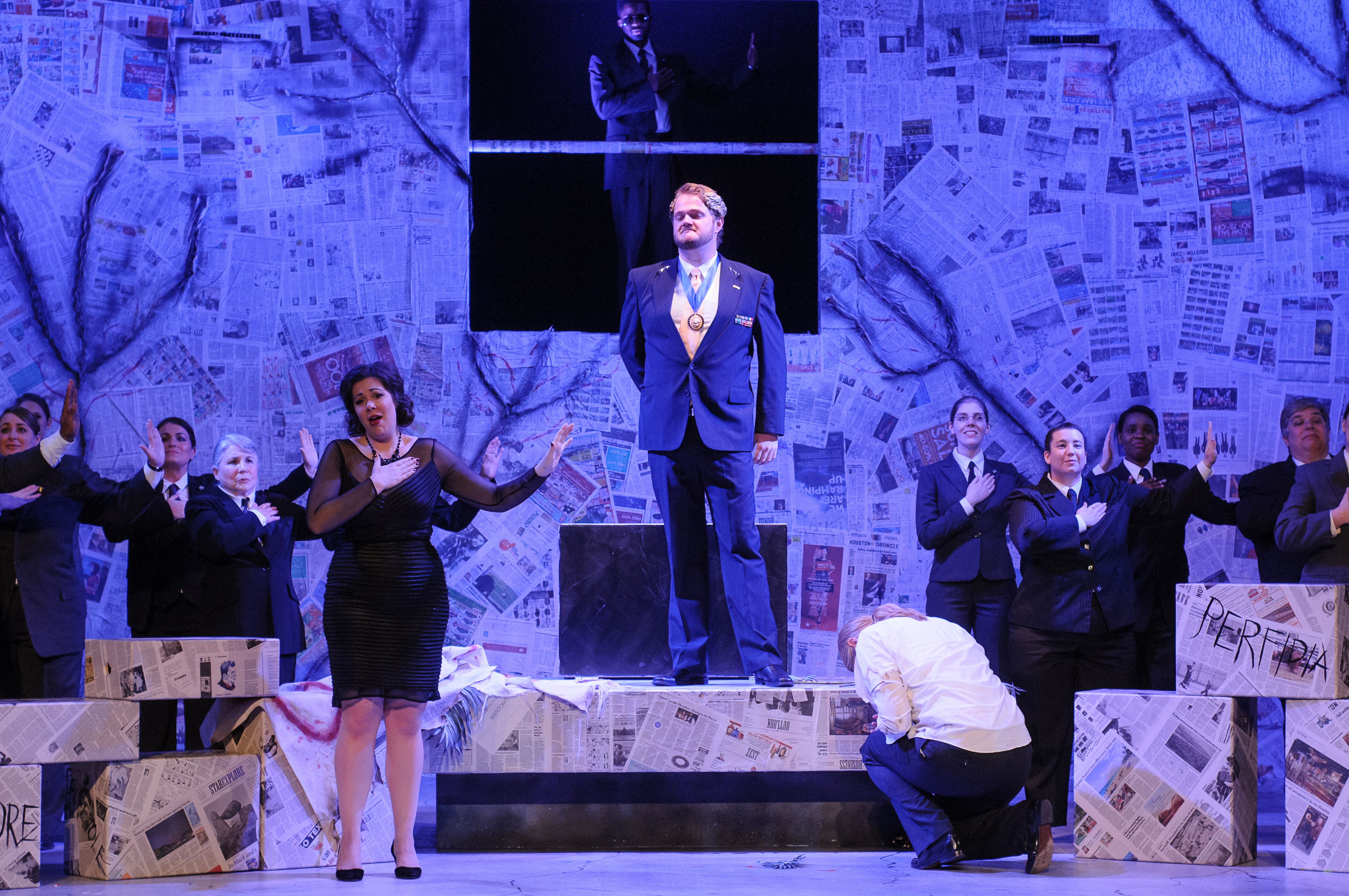
Stage director Keturah Stickann has done exceptional work with the Lambert Hall stage. The blocking was smart, never feeling overcrowded, and the window cut-out at center stage proved a visual treat. The stage, papered from floor to ceiling with newspapers and charcoal pitchforks, bespoke a timely present-day obsession with gossip and misconceptions. The costumes designed by Dena Scheh—sharp suits set against decadent gowns—were tasteful and divinely popped against the newspaper background.

The orchestra, under the new direction of interim conductor Eiki Isomura, was reliably solid. Even so, there were a handful of unfortunate moments when the singers lagged behind the orchestra. Isomura notes in the program that initially he felt intimidated by La Clemenza. While he seems in many ways to have conquered this (a triumphant downbeat to the overture surely testified as such), overall he directed with a slight awkwardness, as though he were still getting to know the score and his musicians.

It’s not often that opera celebrates the deep virtues of forgiveness, generosity, and love, where the opera ends with a chorus of loyal subjects asking the gods to grant their sovereign a long life. More regularly, audiences are confronted with prolonged death, lingering deceptions, and questionable moral codes that no doubt delight us (Don Giovanni, for example), but are nevertheless commonplace in the genre. Here, we are left with a uniquely comforitng blanket absolution thanks to the zeal of OH’s cast and the warm familiarity of Lambert Hall.

Christmas Lists

HGO premieres A Christmas Carol with music by Iain Bell and libretto by Simon Callow. It is the worst kind of bad–a boring bad. Read my review at Houstonia Magazine.

In happier holiday news, read my Top 5 classical and opera picks of 2014, also at Houstonia. Cheers to a merry 2015!